
Efficient Systems
An efficient battery housing has many attributes that aid passenger and battery safety and, assist in thermal management, while protecting the battery from the harsh environment under the vehicle and in an accident. The system must be produced within the financial and weight constraints of the vehicle.
The battery box consists of four primary structural pieces: top cover, bottom cover, internal structure, and side impact crash protection structure. In the image below, the primary load-bearing structural components are identified as the crash structure and the battery frame.
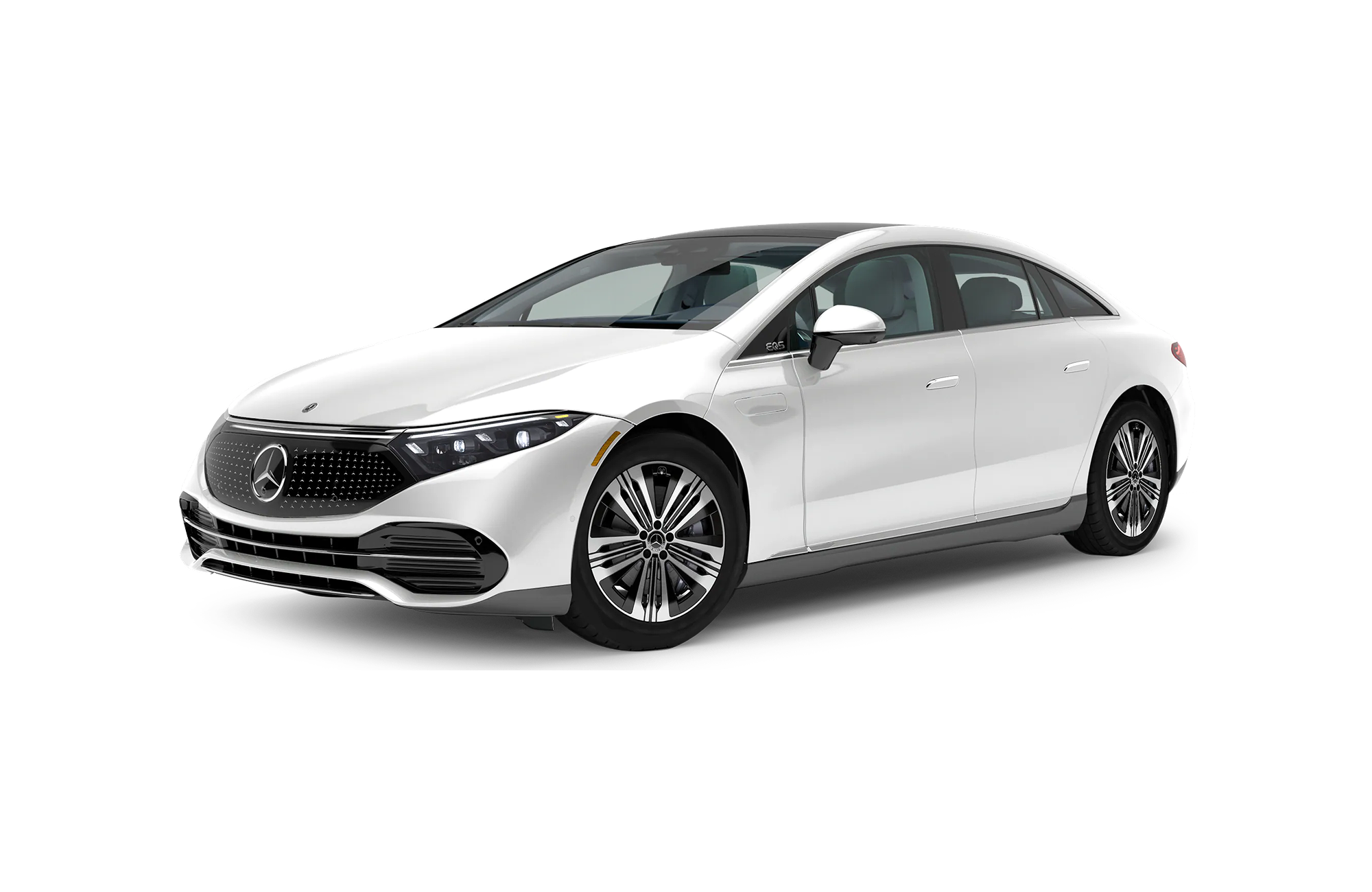
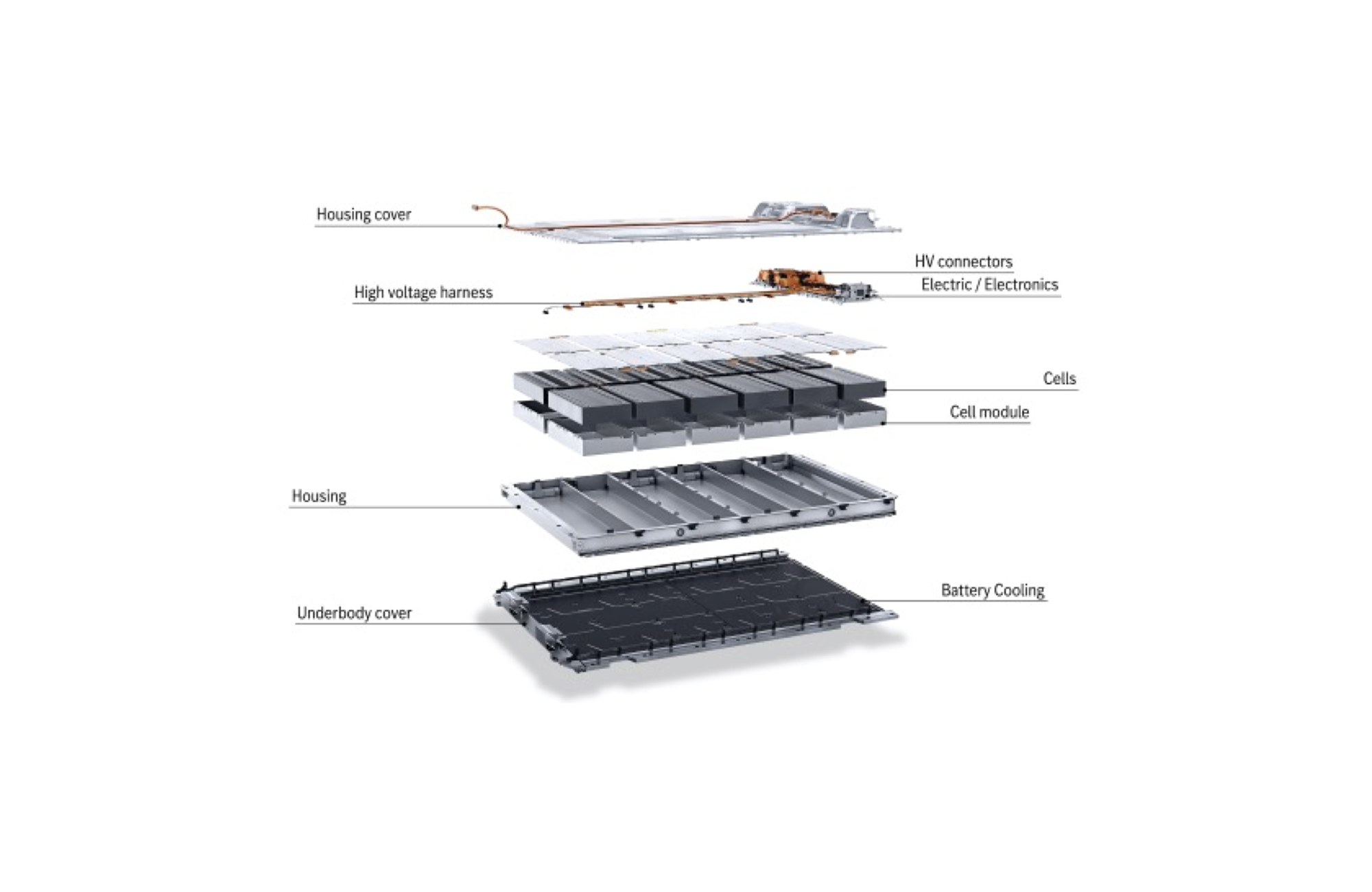
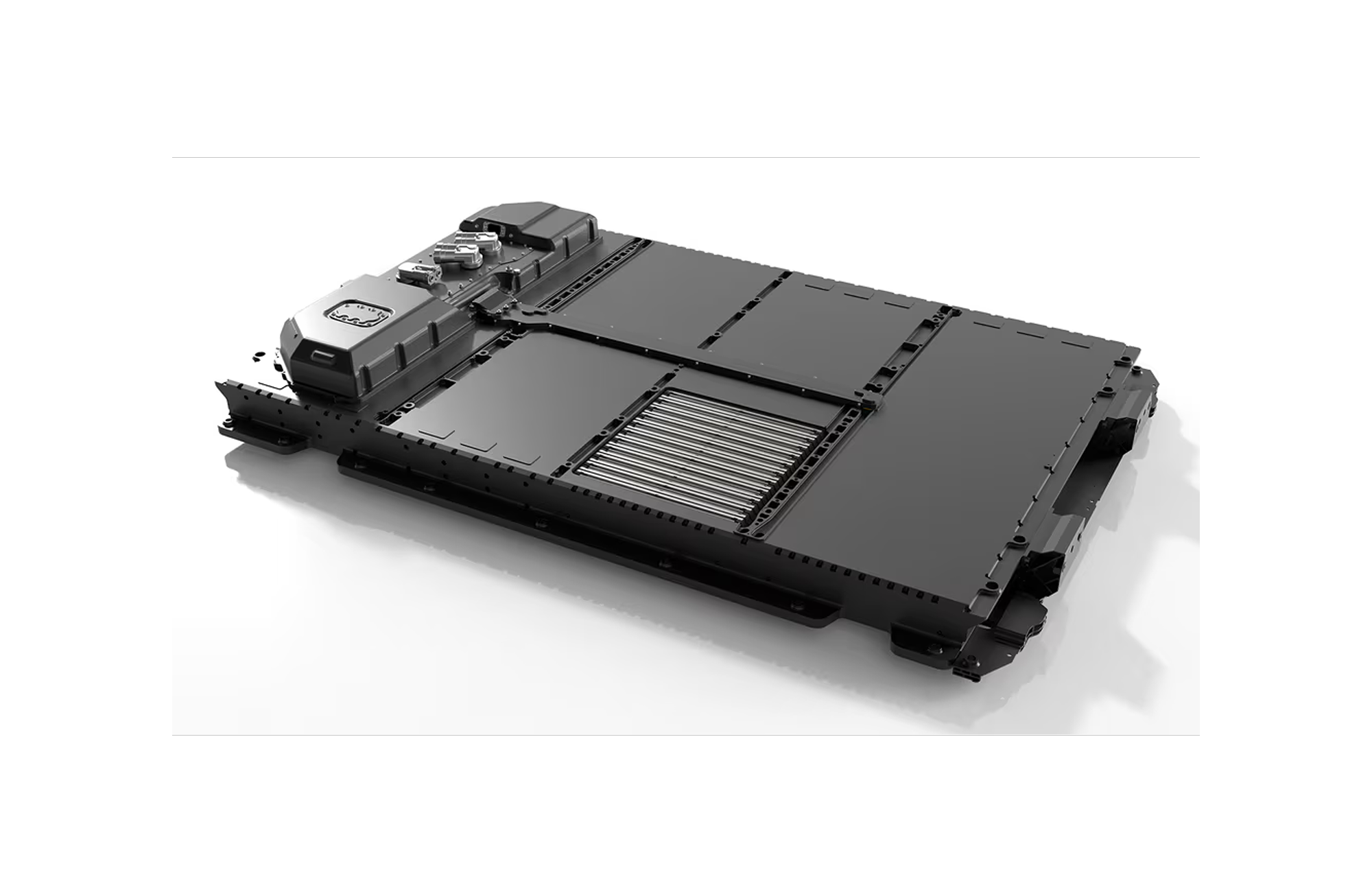
Extrusions enable the lightweight structural housing and the perimeter cooling circuit on the Mercedes EQS. Similar construction on the new solid-state battery for the EQS Formula 1 car.
Size and Weight
The battery system 2m x 1.4m is enormous in size and weight, as much as 700 kg and 22-27% of total vehicle weight. At a minimum, this mass needs to remain stable during vehicle performance. In the best designs, the battery and enclosure greatly enhance vehicle structure and ability to absorb crash energy. To perform under these requirements, it is imperative to select the best materials and manufacturing processes for the housing and structure, which comprise as much as 20% of the cost and the weight of the battery system. The long-length battery boxes contain constant cross-section side rails and cross members, both of which are ideal for extrusions.

Porsche Taycan
The Porsche Taycan EV credits the use of aluminum extrusions to carry the structural load, and to absorb crash energy to keep the passengers safe. Porsche engineers say that the battery and pack represent about 10% of the vehicle body stiffness:
"Without the battery, the car isn’t crash safe."
—Porsche Taycan EV body design lead
More evidence of extrusions on the Taycan are the “truss design battery frame,” and the “0.6-inch extruded aluminum honeycomb structures running the length of the rocker panels.”
Crash Management
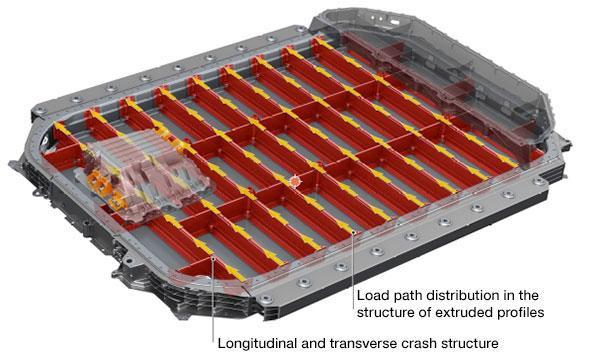
“Load path distribution in the structure of extruded profiles”…which makes up 47% of the sophisticated crash structure of the Audi e-Tron.
Audi e-Tron Battery Box Showing Extrusions
In a crash, including the side pole crash test, extrusions offer significant protection to of the battery system due to the strength and energy absorption, with minimal weight. By nature, extrusions can be produced in a single section, providing load-carrying capability, and this same volume doubles the circuit to transport liquid cooling fluid.

Why Are Extrusions Effective for Battery Box Design?
Extrusions deliver an efficient geometry offering multiple functions:
- Crash energy absorption
- Torsional stiffness
- Considerable strength with minimal weight
- Leak-free fluid transfer through structural members
Stiff, strong, and straight extrusions provide structural support, crash management, fluid transport, and robust mounts in effective battery box designs.
Ready to get started? Find an extruder