2026 RICK MERLUZZI ALUMINUM EXTRUSION STUDENT DESIGN COMPETITION WINNERS DISPLAYING AT ET ’27

A total of 103 entries for the Extrusion Technology (ET) Foundation’s 2026 Rick Merluzzi Aluminum Extrusion Student Design Competition were submitted by students from 11 countries around the world. High school and college students submitted entries for the opportunity to receive a cash scholarship award. The entries were evaluated by competition judges Craig Werner, CEO of Intelligent Extrusion LLC, and Carl Holderbaum, Operations Director at Bonnell Aluminum’s Newnan, Georgia plant. The ET Foundation thanks MI Metals, Inc., Pennex Aluminum and Bonnell Aluminum for sponsoring the Student Design Competition this year! The winning 2026 Student entries will be displayed at the Extrusion Showcase during ET ’27, April 26-30, 2027, in Orlando, Florida. Seven students received awards, including the First, Second and Third Place Awards, the Sustainable Design Challenge Award, and the Honorable Mention Awards.
First Place - $5,000 Scholarship
E-VAWT – Extending Vertical Axis Wind Turbine
Octavia Chitty, Purdue University
West Lafayette, IN, USA
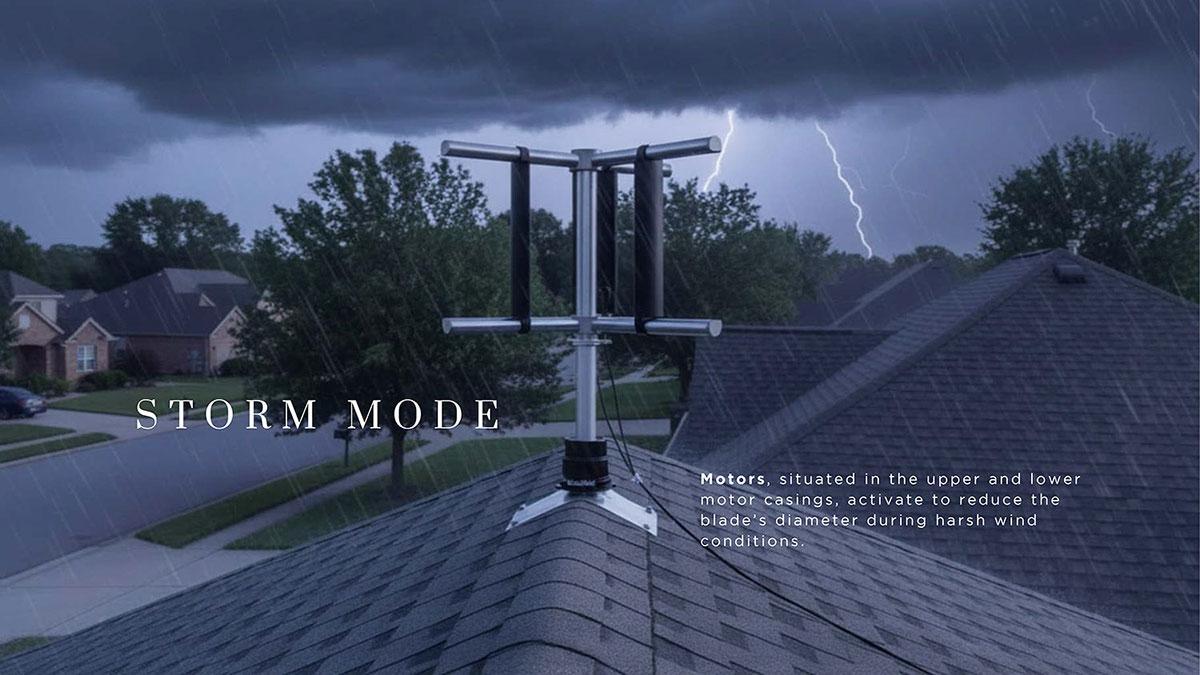
Octavia Chitty, a sophomore studying Industrial Design at Purdue University in West Lafayette, Indiana, USA, received the First Place award of $5,000 for her E-VAWT design, an extending vertical axis wind turbine for residential owners who want to harness the wind by continuously generating power in multiple weather scenarios with its adjustable blade diameter, which is unlike traditional vertical wind turbines.
On a typical wind turbine, when winds are high and the turbine radius is large, the torque will be very high, causing the turbine to spin out of control. With high winds and a small turbine radius, as with Octavia’s E-VAWT extruded aluminum design, the torque will be manageable.
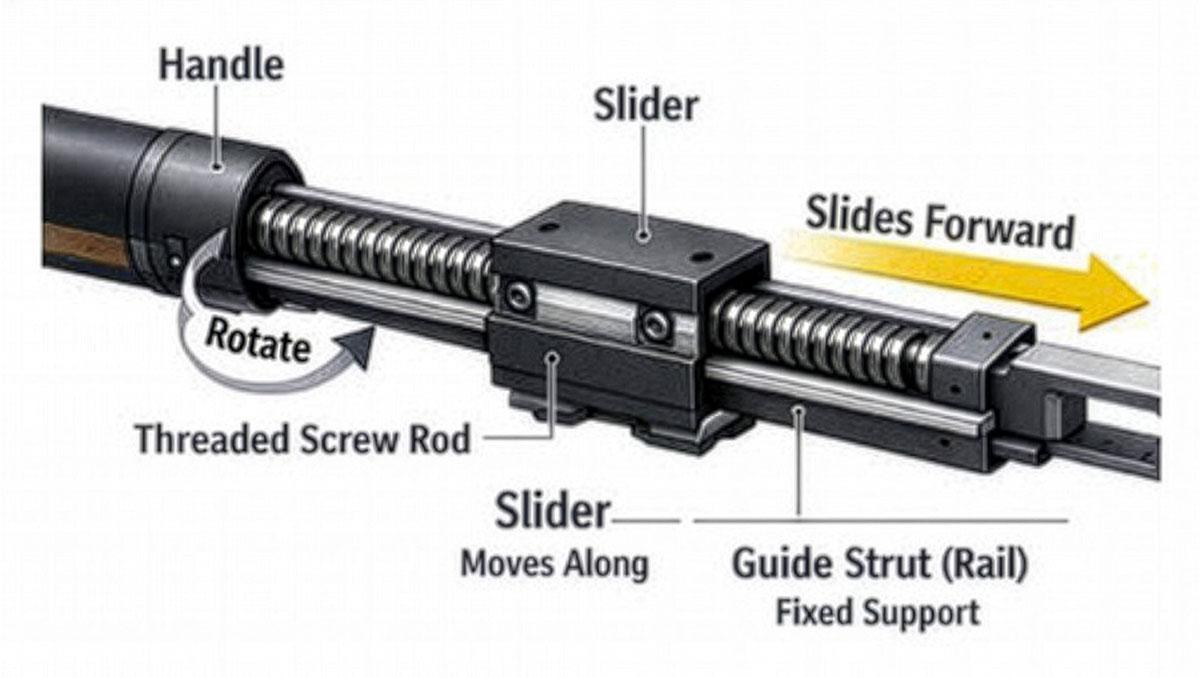
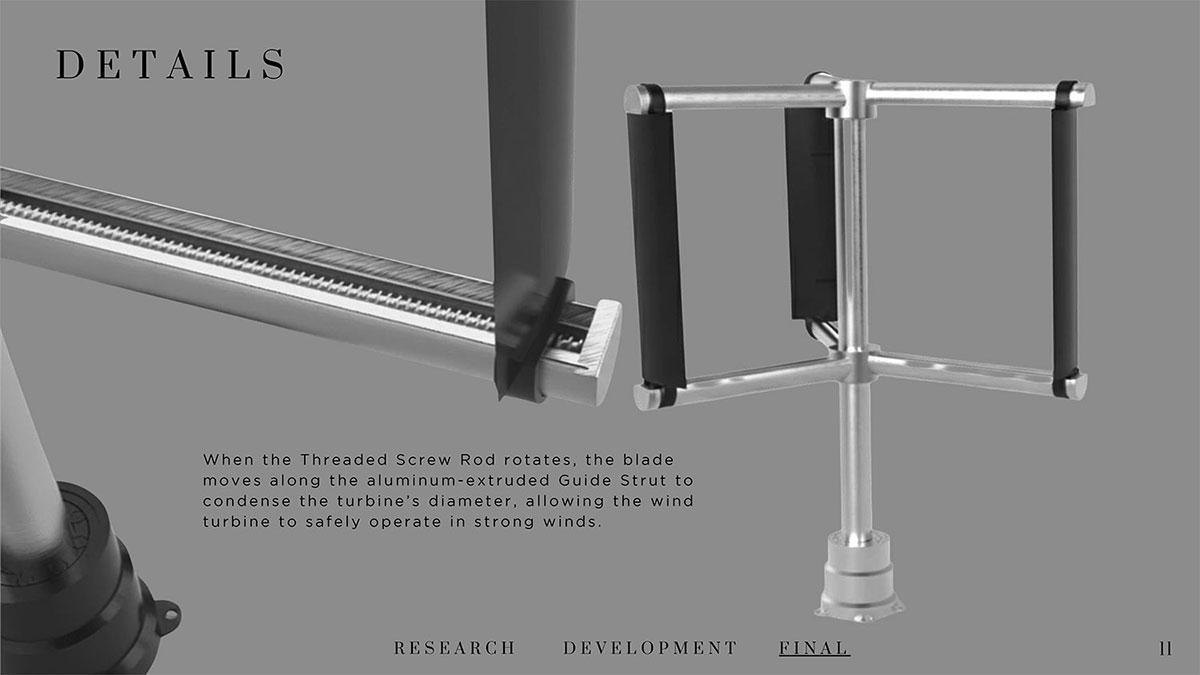
Octavia’s winning extrusion design facilitates a mechanism that is functional, manufacturable and innovative. She envisioned the guide strut/fixed rod could be made from extruded aluminum. When the threaded screw rod rotates, the wind turbine’s blade moves along the aluminum extruded Guide Strut rail to condense the turbine’s diameter, allowing the wind turbine to safely operate in strong winds.
According to Octavia, “I specified aluminum alloy 6061-T6 for its light weight and sturdiness, providing the ideal combination for supporting parts that are impacted by natural forces. The Guide Strut on this wind turbine allows for the blades to change diameter and therefore capture energy from stronger winds for longer periods of time.”
Judge Craig Werner noted, “The vertical wind turbine is very interesting, but particularly the powered means for pulling the blades in closer to survive heavier winds so that it can be used in many locations throughout the world in a manner that prevents it from destroying itself. This is an excellent use of aluminum extrusions in the veins, in the structure and in its adjustable elements.”
Judge Carl Holderbaum said, “This extending vertical wind turbine for residential use is an innovative concept. Its flexibility lends itself to a wide range of applications and installation settings, while also showcasing the versatile use of aluminum extrusions throughout the design.”
Second Place - $4,000 Scholarship
Mule – Modular Storage System for Work Trucks
Shawn Chen, Purdue University
West Lafayette, IN, USA
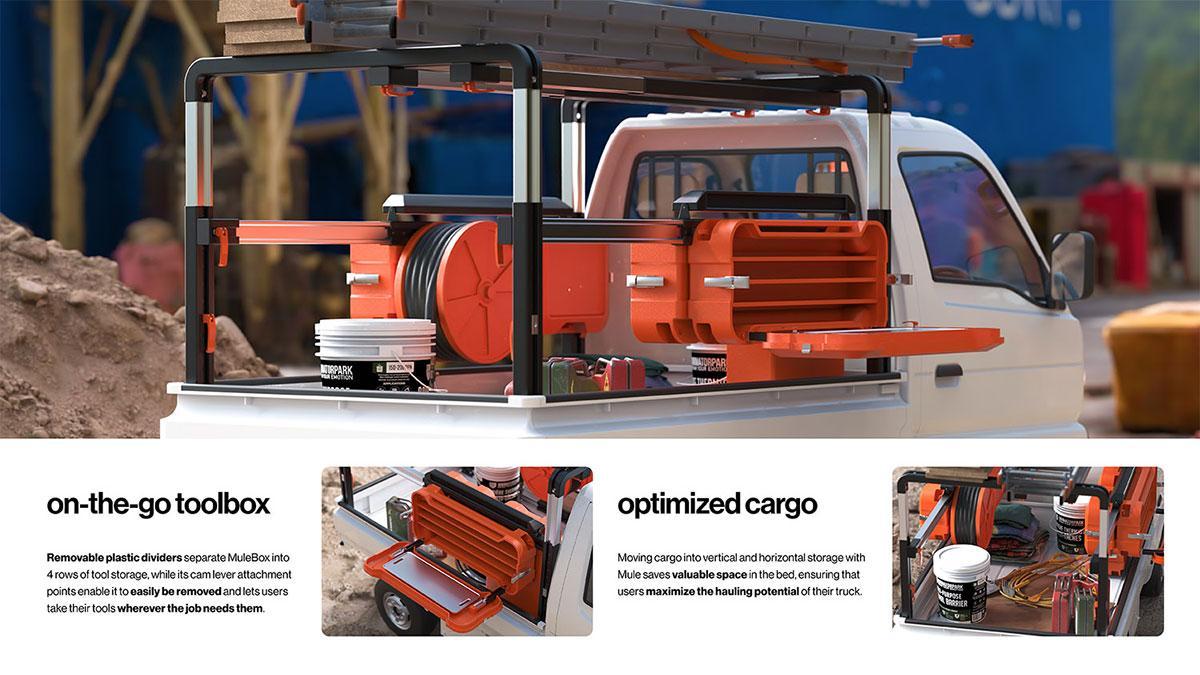
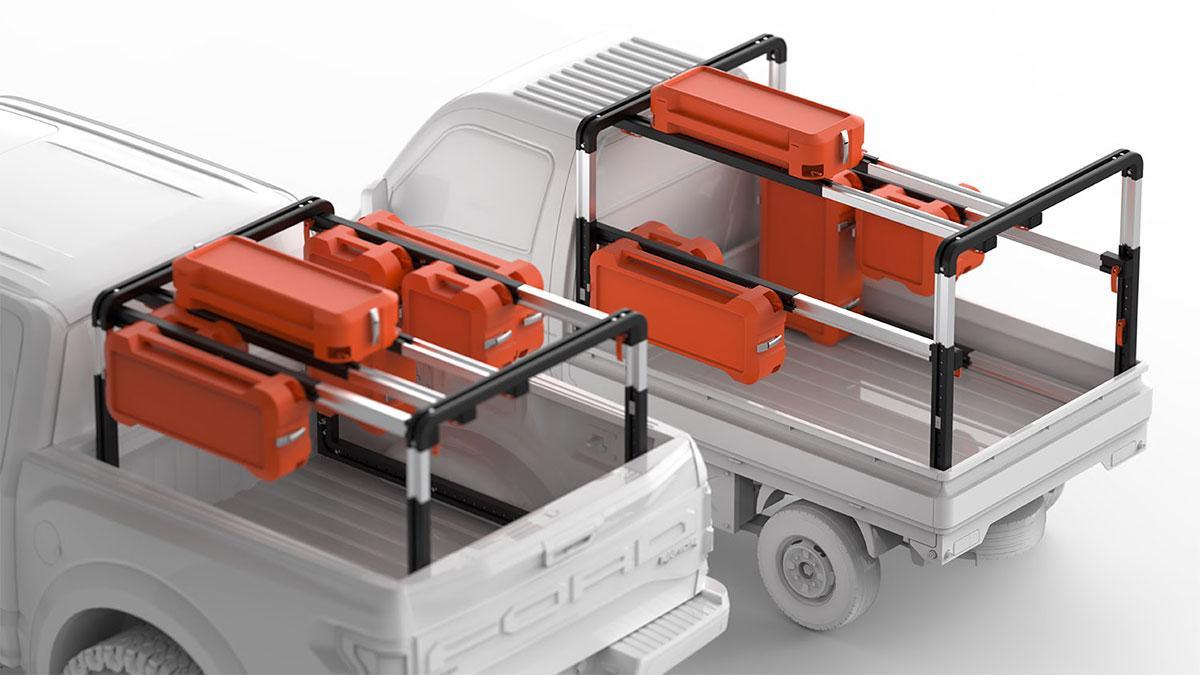
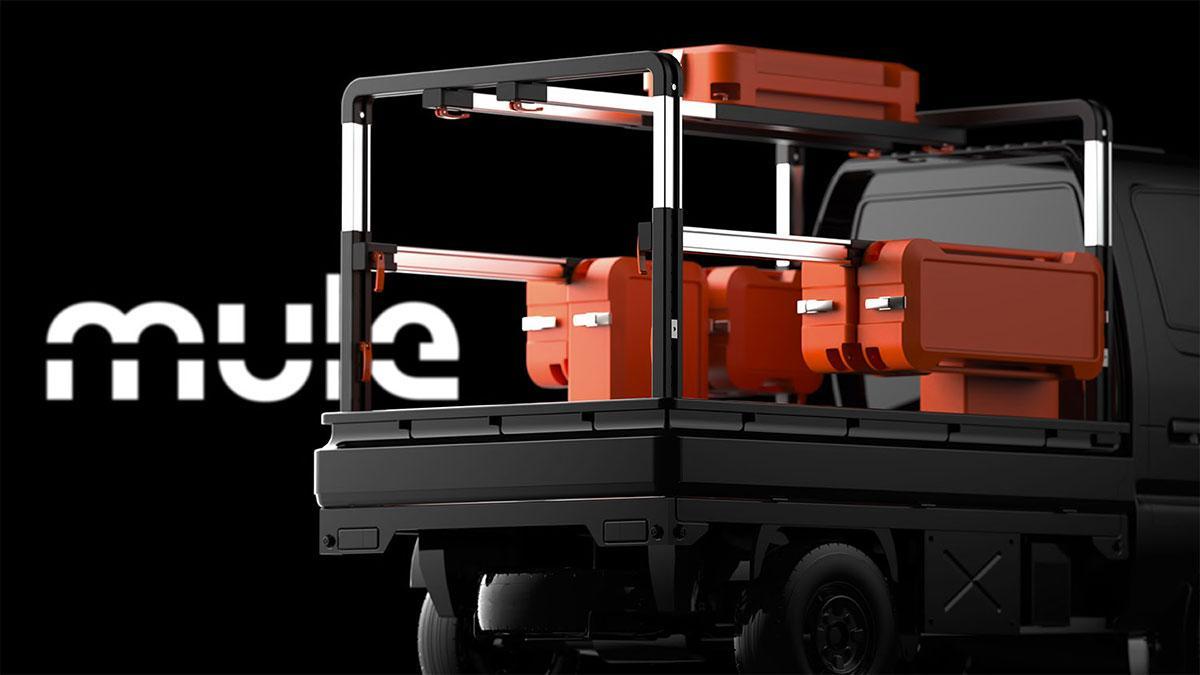
Shawn Chen, a sophomore studying industrial design student at Purdue University in West Lafayette, Indiana, has been awarded $4,000 for his second-place design. The Mule modular storage rack helps year-round farmers and tradespeople who want to adapt their work truck to changing seasonal and task-specific demands with a reconfigurable toolbox system that optimizes carrying capacity without buying new equipment, unlike fixed racks and costly service body conversions. His design helps to reduce time spent searching for tools, tool theft, and work injuries from awkward lifting and poor tool access. Shawn’s design focuses on modular storage within an integrated truck bed with removable, rugged toolboxes he calls MuleBoxes.
The modular system utilizes aluminum alloy 6061-T6 for its corrosion resistance and weight reduction while retaining a 500lb. carrying capacity compared to steel and the ability to be flat pack shipped, filling a large gap in the market for solid-body ladder racks.
Shawn said, “The Mule targets the practicality and market impact criteria by fully utilizing the modular nature of extruded aluminum parts, allowing for multi-functionality in a variety of trades and practices.” The Mule’s chassis, extruded from 6061-T6 aluminum telescoping profiles, is engineered to evenly distribute force along its horizontal axis, fully utilizing the alloy’s 310MPa (45000psi) tensile strength.
The Mule’s extrusions are flat pack shipped, significantly lowers shipping rates and streamlining the delivery-to-installation process. The Mule design optimizes space, moving cargo into vertical and horizontal storage within the truck bed, ensuring that users maximize their truck’s hauling potential.
Shawn further noted, “The Mule’s extruded aluminum powder-coated chassis can be mill finish, black, white or gray matte finishes, blending into the truck’s bodywork while function takes priority.” He proposes that the plastic MuleBox portion of his design be offered in eight distinct colors, for users to easily differentiate contents and use cases. He notes this option plus the versatility of the extruded aluminum chassis provide limitless customization, creating a standard system across a range of applications at a reasonable cost. The Mule’s design provides 80 inches of total adjustability across its length, width and height and accommodates virtually every truck bed on the market, from compact kei trucks to full-size pickups.
The judges said this modular design is a very innovative use of aluminum extrusions to create a more organized work environment for professionals or hobbyists with lots of tools normally sitting in the back of their truck bed. Carl Holderbaum said, “I found the design intriguing. The Mule Frame and Mulebox concept stands out as an innovative storage solution, combining individual storage boxes with aluminum extrusions in both the containers and the framework. Its adaptable frame can be fitted to virtually any vehicle and retrofitted with ease, making it a versatile system with strong potential for agricultural, commercial and residential applications.” Craig Werner noted, “Using this type of system, the truck bed can be kept available for long or heavy, bulky items while the various tools and smaller work implements can be held elevated at the sides, while being easily accessible and removable, which would be useful for a tradesman needing certain tools to carry to a jobsite without having to dig through all the tools in the back of his truck.”
Third Place - $3,000 Scholarship
LZRWrap – Vinyl wrap cutter
Stanislaw Zielonka, Purdue University
West Lafayette, IN, USA
Stanislaw Zielonka, a sophomore industrial design student at Purdue University, West Lafayette, Indiana, has been awarded the $3,000 third-place scholarship for his LZRWrap system for vinyl wrapping cars. The device’s design specifies aluminum alloy 6061 to deliver high strength and durability and support the heavy-weight vinyl rolls. Stanislaw said, “The laser vinyl wrap cutter and measuring tool use extruded aluminum for the process’s ease of creating long, lightweight and high-strength forms, with lower manufacturing costs than using a CNC machine.”
Stanislaw’s design concept stated the LZRWrap creates a better version of a Car vinyl wrap holder using aluminum extrusion, while improving workflow, measuring and cutting precision, and new added features. He explained that currently, heavy vinyl tube rolls on just a thin metal pipe. Car wrapping studios use these simple pipe-based vinyl roll racks that do not provide any measuring or cutting features, relying on a tape measure, which could scratch the vinyl and is uncomfortable to use, and cutting with a hand-held blade that is not precise.
His wall-mounted LZRWrap system design is within easy reach, becoming part of the workspace rather than an added tool. The laser measurement and cutting are an integrated part of the roll rack, streamlining the wrap process with precision and control.
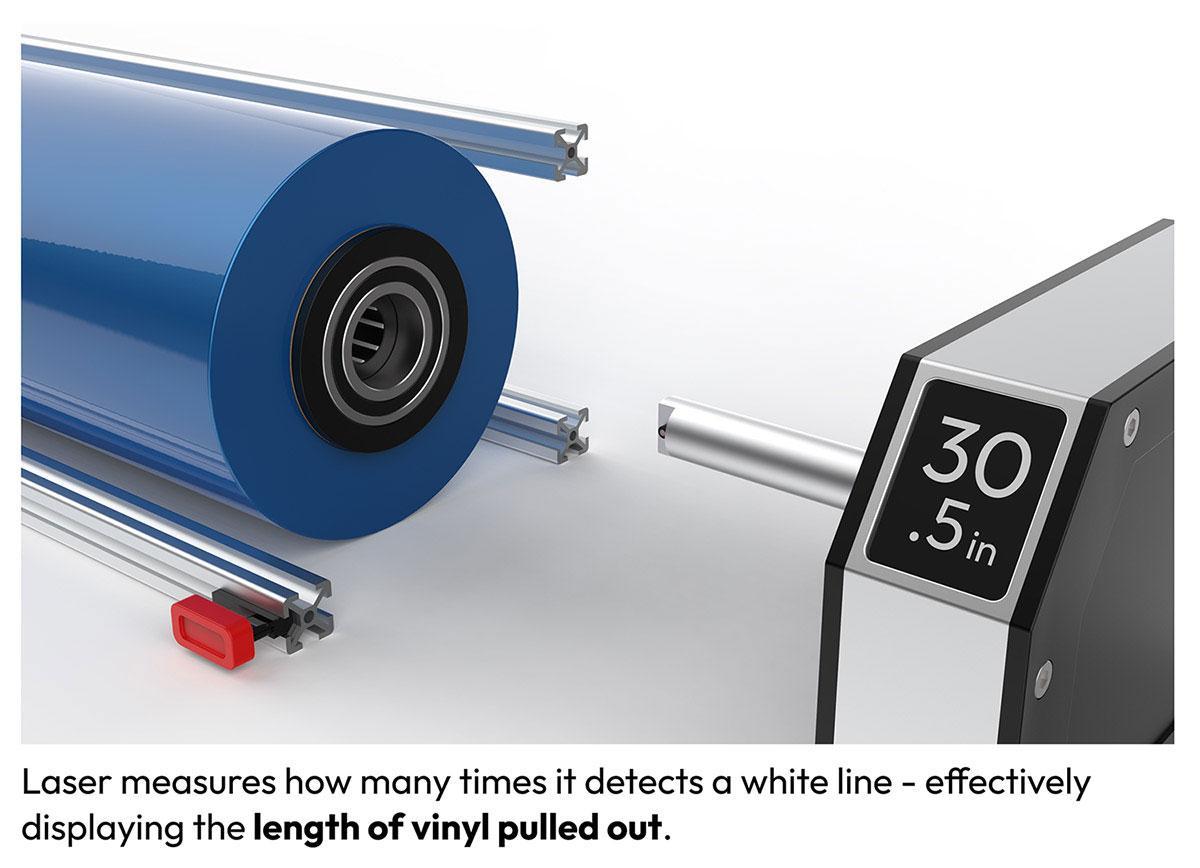
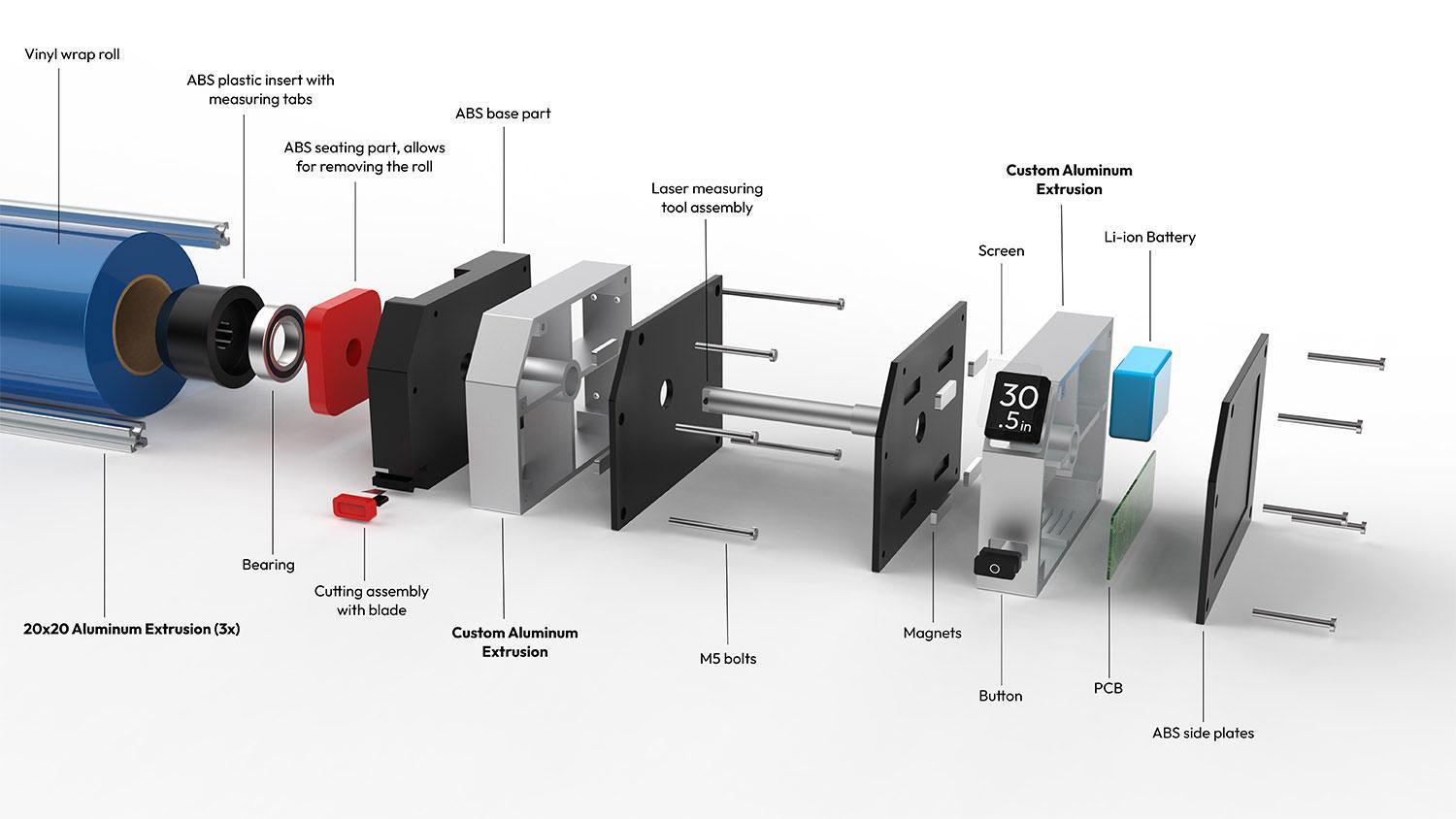
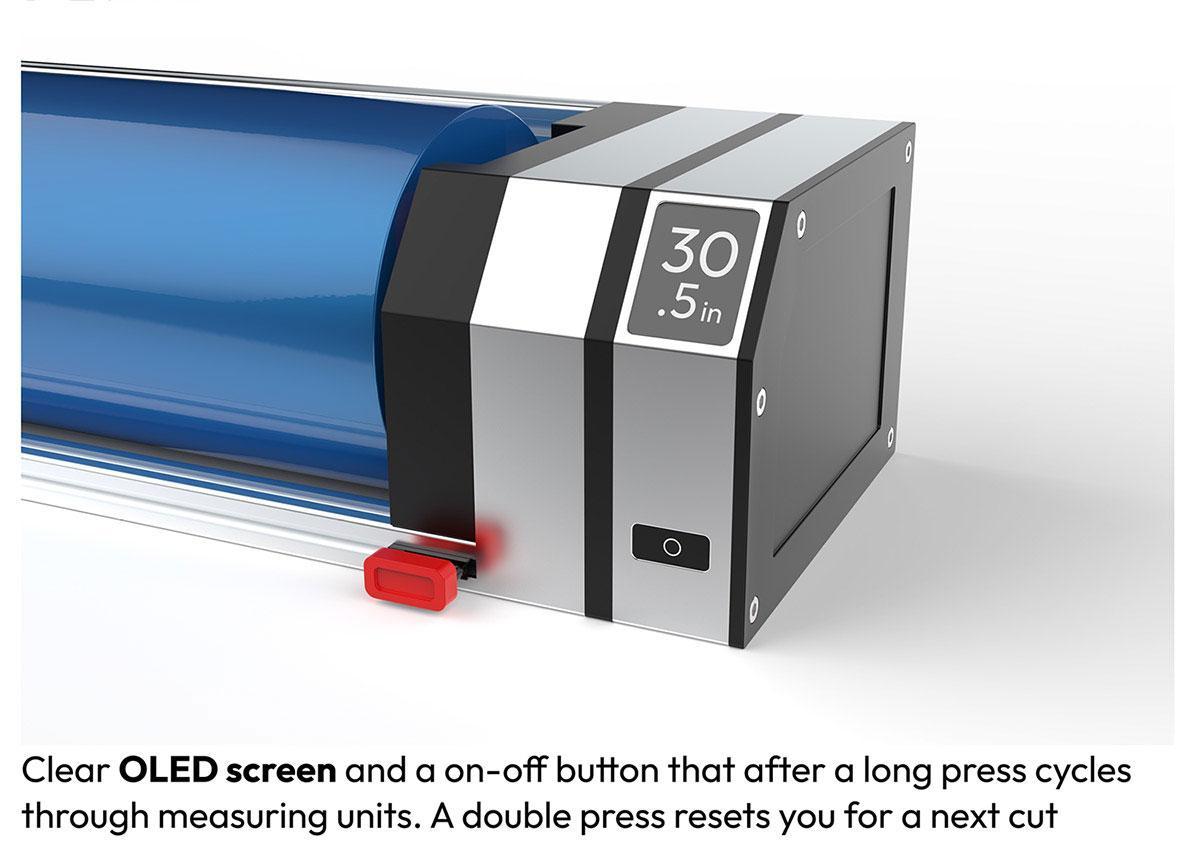
Stanislaw noted, “Instead of using a tape measure, a wrapping specialist can now rely on a screen to show how much vinyl has been pulled out. The system delivers a quick, perfectly square cut made by a cutting edge “knife” that slides across the length of the roll. Any needed vinyl roll can be inserted into the rack easily to experience a smooth workflow. Features include a clear OLED screen and an on-off button that, after a long press, cycles through measuring units. A double press resets for the next cut. The unit has an easily replaceable blade that glides onto a 20mm x 20mm extrusion, providing consistent straight cuts. The rack laser measures how many times it detects a white line, effectively displaying the length of the vinyl pulled out. The device uses magnets to enable easy switch between vinyl rolls.
The LZRWrap’s vinyl measuring system features a laser that visually detects white lines, measuring the revolutions of the vinyl roll. NFC tags on 3D printer filament rolls can be added to existing vinyl rolls; thanks to these tags, car wrap shops can track and estimate leftover wrap, which is beneficial for minimizing vinyl wrap waste and easing workflow. The device is designed for simplicity and is standardized for 75-ft., 150-ft., and 60-inch-wide rolls. The aluminum extrusions form the housing/guides for the vinyl wrap rolls and the measuring device with built-in laser is a custom aluminum extrusion.
Stanislaw further explains that aluminum extrusion excels at creating long pieces with a uniform cross-section. “My vinyl cutter uses long, 20mm x 20mm extrusions, as well as a custom profile. The aluminum extrusions provide excellent strength at a lower cost compared to CNC machining. My cutting assembly works perfectly with a standard 20mm x 20mm extrusion, ensuring the cut will be precise and straight.”
Judge Carl Holderbaum said “What first appeared to be a design intended solely for automotive vinyl application revealed much broader potential on closer inspection, with versatility for a wide range of uses wherever protective film is needed.”
Sustainable Design Challenge Award - $3,500
Floatovoltaic System for Solar Energy
Issiah Tabatt, University of Wisconsin Stout
Menomonie, WI
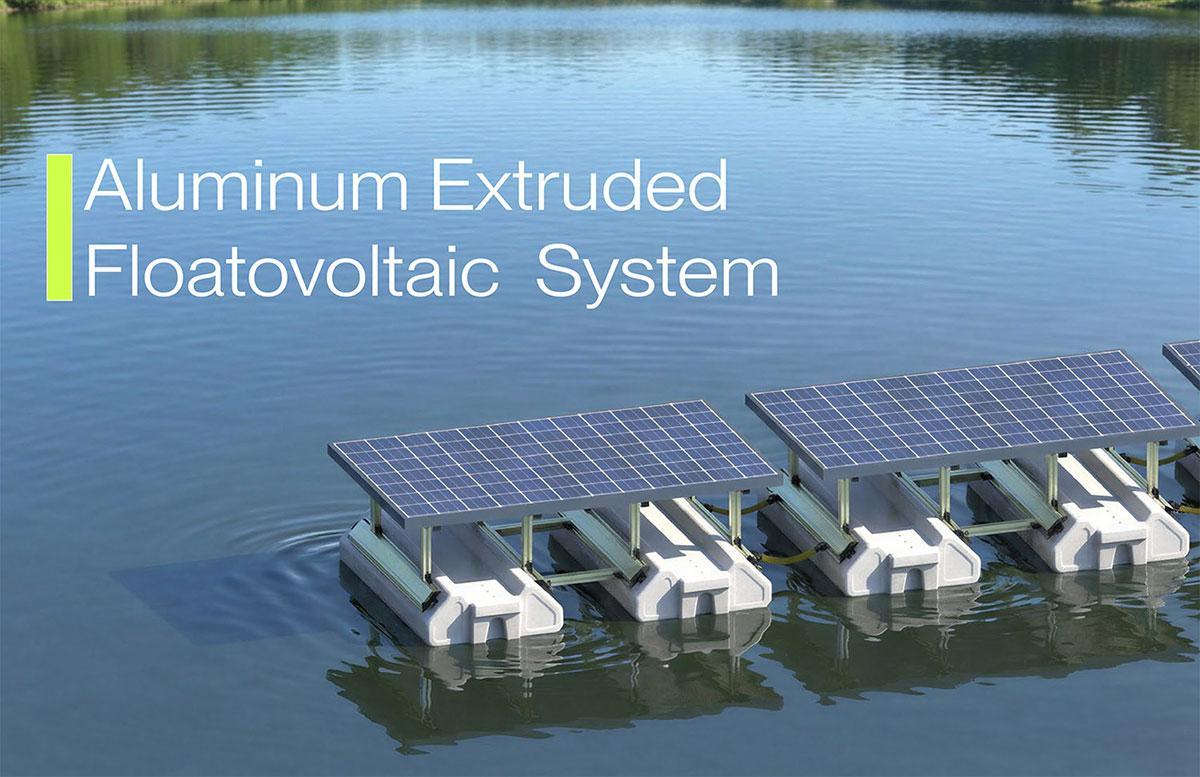
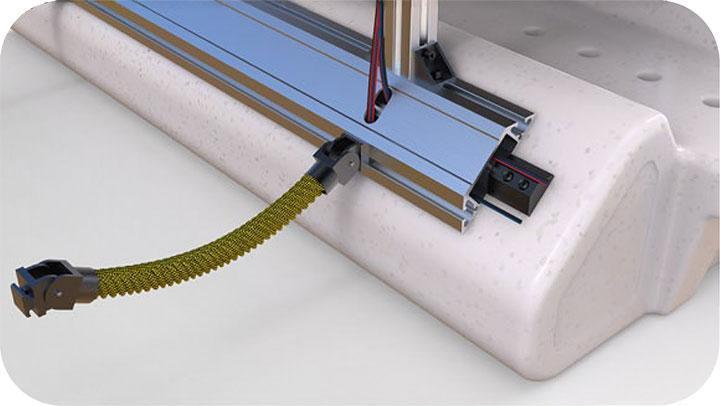
Issiah Tabatt, a sophomore industrial design student at the University of Wisconsin Stout, Menomonie, Wisconsin, has won the Sustainable Design Challenge $3,500 scholarship award for his Floatovoltaic System to produce solar energy. Aluminum alloy 6063-T6 was specified for the extrusions for its excellent corrosion resistance, lightweight strength and ability to form complex, integrated profiles for structural support and cable management.
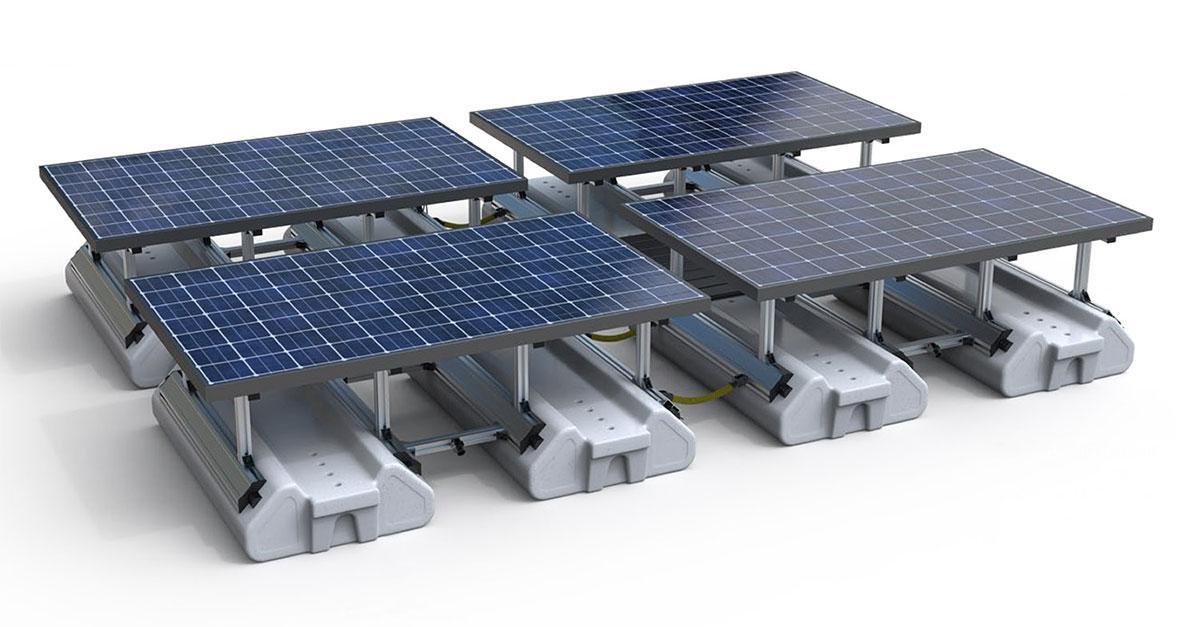
Issiah said, “My extrusion design revolutionizes the solar industry because it integrates multiple necessary functions in a single profile. By doing this, I have significantly reduced the number of parts, simplified assembly and improved system durability.” The system fulfills several functions while remaining consistent and reliable.
He continued, “I wanted the extrusion to be the backbone of the photovoltaic system. This meant not only being the frame that supports the solar panels but also being the key component when connecting other panel assemblies together. Lastly, I wanted a way to protect and organize the cables and wires of the Solar panels. This meant creating a tunneling system that would hollow out my profile. Part of the challenge when designing this profile was trying to keep consistent, even thickness for extrudability and durability. After creating different options, I 3D printed and tested my designs for weak spots; through learning and discovery, I came up with an extrudable aluminum profile that I believe could be effective and extremely useful in a real-world case.”
“My system encompasses the heart of sustainable design, considering every stage from material selection to lifespan optimization. By using recycled HDPE for the pontoon bases and 6063‑T6 aluminum extrusions for structural support, the system minimizes environmental impact while maximizing durability. Aluminum is fully recyclable, corrosion resistant and lightweight, allowing for precise, long-lasting structural assemblies. HDPE is resistant to water, UV, and corrosion, ensuring that the platform remains functional for decades without significant maintenance. Used together, these materials reflect a conscious choice to prioritize both performance and environmental responsibility, demonstrating how thoughtful material selection can directly support sustainable engineering practices.
Issiah continued, “Unlike traditional solar installations that occupy valuable land and render it unusable, this Flotovoltaic system reclaims otherwise underutilized water surfaces for energy generation. By floating solar arrays on lakes, reservoirs or canals, the system produces renewable energy without competing with agricultural or natural land. Additionally, the modular design allows for flexible arrangement, easy expansion, and integration with other floating systems, reducing installation disruption. The extruded aluminum not only provides structural integrity but also serves as a protective channel for wiring, keeping electrical components safe from the elements while maintaining a streamlined, efficient design. This approach illustrates how sustainability can be embedded, not just in materials, but in innovative system design that maximizes space, efficiency, and longevity.”
The judges recognized the multi-material benefits of this integrated, sustainable design. Craig Werner noted, “Issiah’s sustainable design could hugely impact the world as systems like this are implemented using multi materials to create a platform that securely and safely harnesses solar energy. The solar energy from this photovoltaic system mounts on top of floats and connects together, enabling areas which would otherwise be under-used to be covered, such as lakes, ponds, parts of rivers or oceans, etc. In some instances, the extra space available to mount these on water, rather than over land would increase the use of photovoltaic energy sources, or other areas. An added benefit would be that evaporation would be decreased through shading of the water areas. Implementing a system such as this worldwide could have a noticeable impact on improving the quality of life for future generations.”
Judge Carl Holderbaum said, “This is a strong sustainability project with global potential. In areas where large land parcels aren’t available for solar fields, floating solar panels offer a smart and versatile alternative. The integration of aluminum extrusion framing and base extrusions attached to the pontoons highlights an innovative use of aluminum within a sustainability system that can be adapted for applications around the world.”
Sustainable Design Honorable Mention - $1,000
Extruded Aluminum Water Sterilizing & Cooling System
Samuel Lenk, University of Wisconsin Stout
Menomonie, WI
Samuel Lenk, a junior industrial design student at the University of Wisconsin Stout in Menomonie, Wisconsin, has received a $1,000 Honorable Mention in the Sustainable Design Challenge for his Extruded Aluminum Water Sterilizing & Cooling System. The system is designed to sterilize and cool water efficiently in remote and low-tech areas.
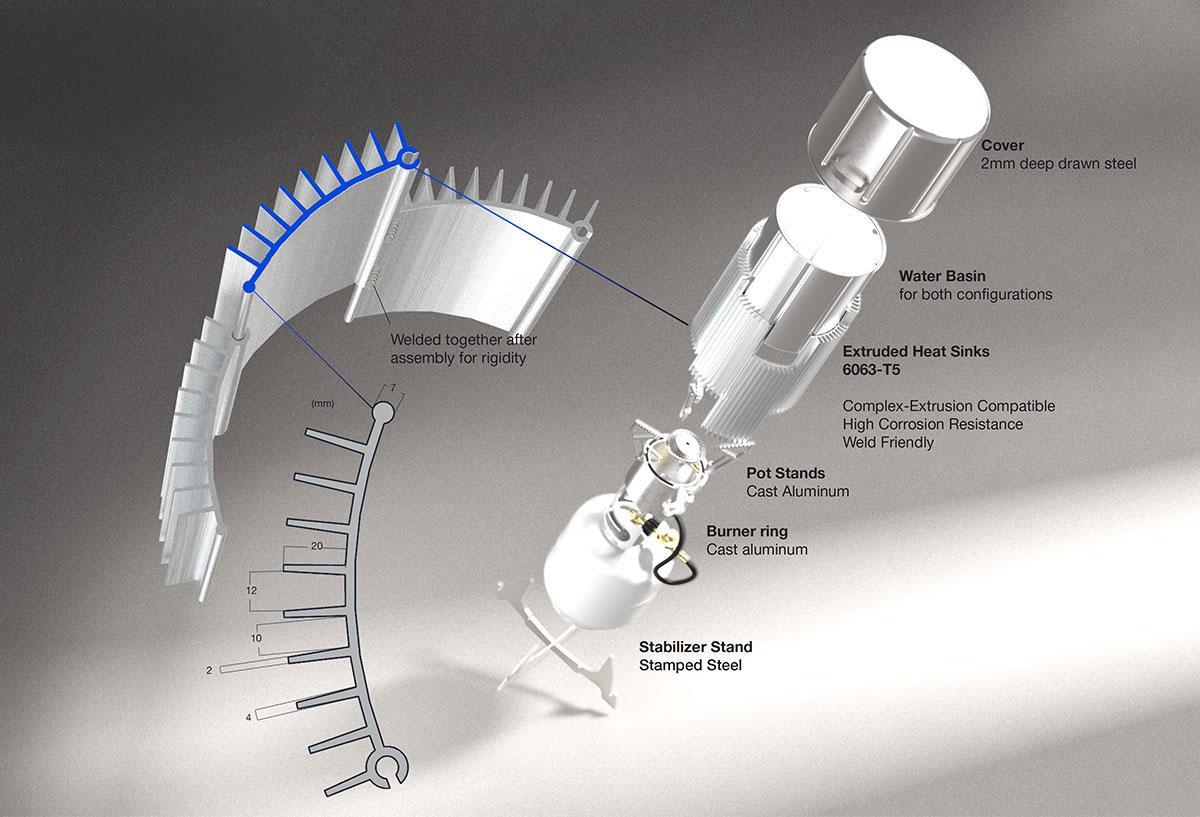
Samuel chose aluminum alloy 6063-T5 for its conductivity, extrudability into complex shapes, corrosion resistance, and light weight. He noted, “This design uses the advantages of the material and the extrusion process to create a lightweight, reliable, and easy to ship product. The design offers the ability to quickly deploy the system for water sterilization and cooling in more remote and low-tech applications from research bases to third-world countries, where access to filters, UV sterilization, and iodine/chlorine tablets is limited. My design uses aluminum’s conductivity to help cool the water faster.”
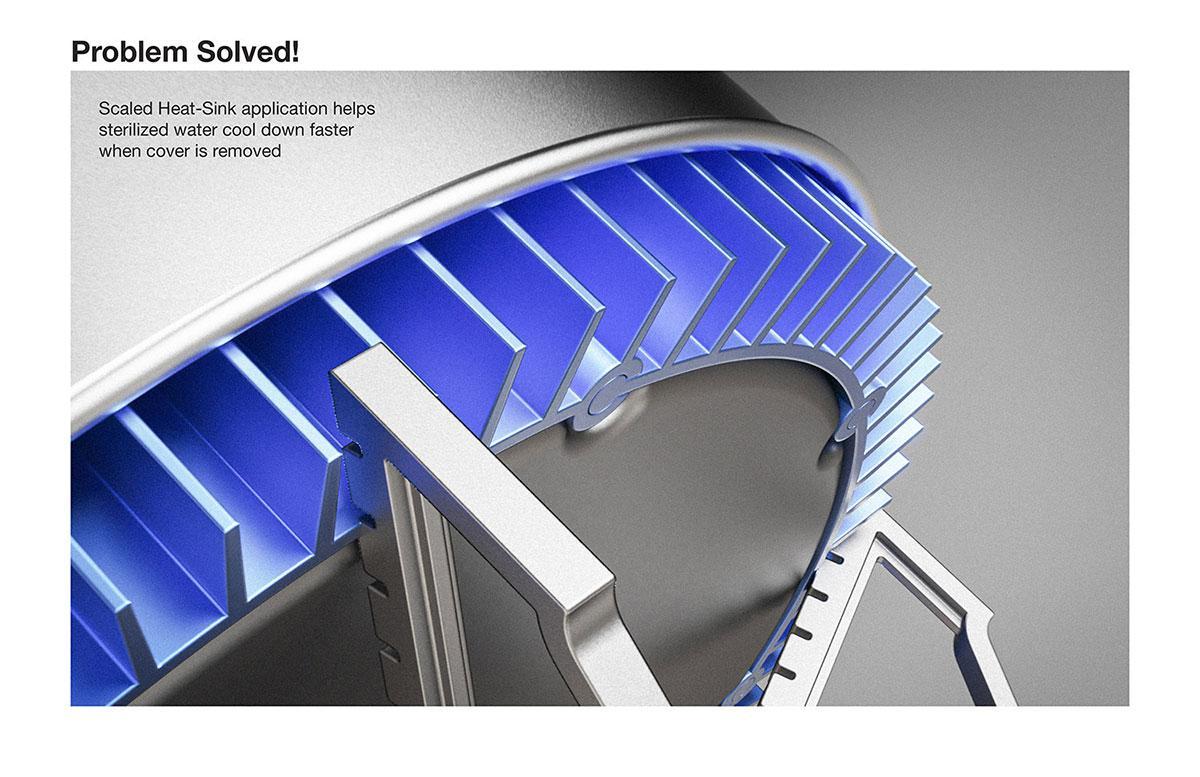
Samuel compared his system with currently available water sterilizing and cooling options that include boiling, chlorine, iodine, filtration, and UV light. He determined that a scaled heat-sink application helps sterilized water cool down faster when the cover is removed. His concept notes that, since covered air pockets trap heat, water boils faster; he determined that exposed fins conduct heat, allowing water to cool faster. In his design, the cover retains heat while boiling and serves as a water carrier. The stove ring fits on standard 20lb. propane tanks and stabilizes the large water basin. His design includes a stabilizer with notches that fit on standard, 20-inch propane tanks.
The extruded heat sinks are welded together after assembly in this system for rigidity, designed for lightweight shipping and maximum efficiency for medium-to-large batch sterilization applications. The complex heat sink extrusions are compatible with the water basin and are highly corrosion resistant and weld friendly.
Samuel summarized his design for use in a propane configuration as ideal for remote research expeditions and field operations, integrating directly with a standard propane tank to deliver fast, reliable water sterilization. “This system prioritizes efficiency and repeatability, using an integrated aluminum heat sink to rapidly cool boiled water once the cover is removed. Its compact, modular construction allows for easy transport and setup in environments with limited infrastructure. Built for durability and consistent performance, the system supports extended use in demanding, off-grid conditions.”
For low-tech, low-resource areas, Samuel explained, “The Biomass stove configuration adapts the same core system to a stamped steel, easy-assembly biomass stove fueled by wood, dung, or other locally available materials. Designed for accessibility and repairability, it minimizes reliance on manufactured fuel while maintaining effective water sterilization. The modular design enables flat-packing, simple assembly, and long-term use with minimal tools or replacement parts. By leveraging locally sourced fuel and durable components, the system supports sustainable, low-cost deployment in resource-constrained communities.”
Judge Carl Holderbaum noted, “This was an elaborate yet highly compelling application of water evaporation and purification technology. Its potential use in remote areas makes it especially noteworthy, and the duel-fuel capability adds another layer of practical innovation – making it well deserving of an honorable mention.”

Honorable Mention - $1,000
Modulo Affordable Housing
Charles White and his Teammate Enrico Diaz
DePaul University in Chicago, Illinois
Charles White and his Teammate Enrico Diaz, senior and junior industrial design students at DePaul University in Chicago, Illinois, received a shared $1,000 Honorable Mention Award for their Modulo Affordable Housing system design. Modulo is designed as a manufactured, modular housing system using aluminum alloy 6063 as the preferred architectural aluminum for its durability, corrosion resistance, and high strength-to-weight ratio.
Enrico noted that their design is an exceptional example of aluminum extrusion because it transforms today’s manufactured housing system, adding a modular component, and proposes a more efficient and lower cost means of production. Charles noted that the medium-strength, architectural alloy can be extruded into complex shapes that blend functional benefits with aesthetic powder-coat finishes.
The pair saw the potential of using aluminum extrusions to overcome the existing plethora of mundane rectangles used in manufactured housing. They commented, “Our goal is to transform the system by integrating human-centered design within structural systems to promote personal autonomy and human wellness.”
Their research identified an affordable housing crisis, and showed a production gap in housing, combined with a high median home cost that prices out first-time buyers at record rates, and a U.S. modular housing market share below 5 percent. To appeal to this market, they asked, “How can affordable housing be more accessible, cheaper to live in, and faster to manufacture, while maintaining a human-centered design?”
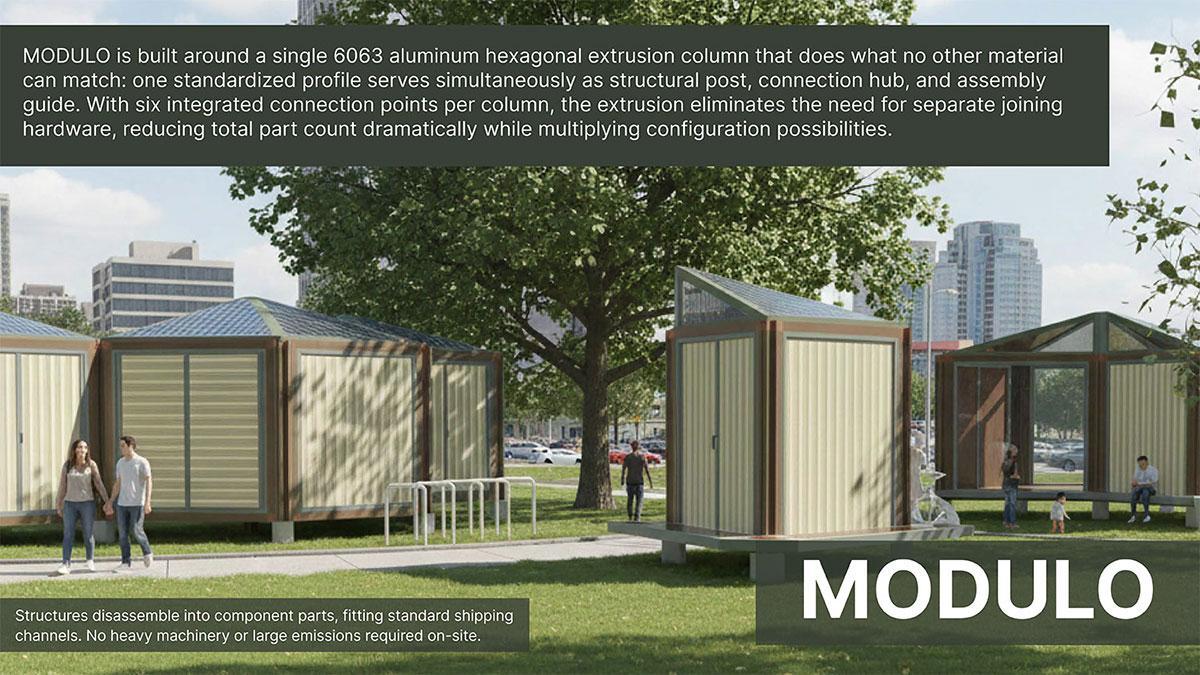
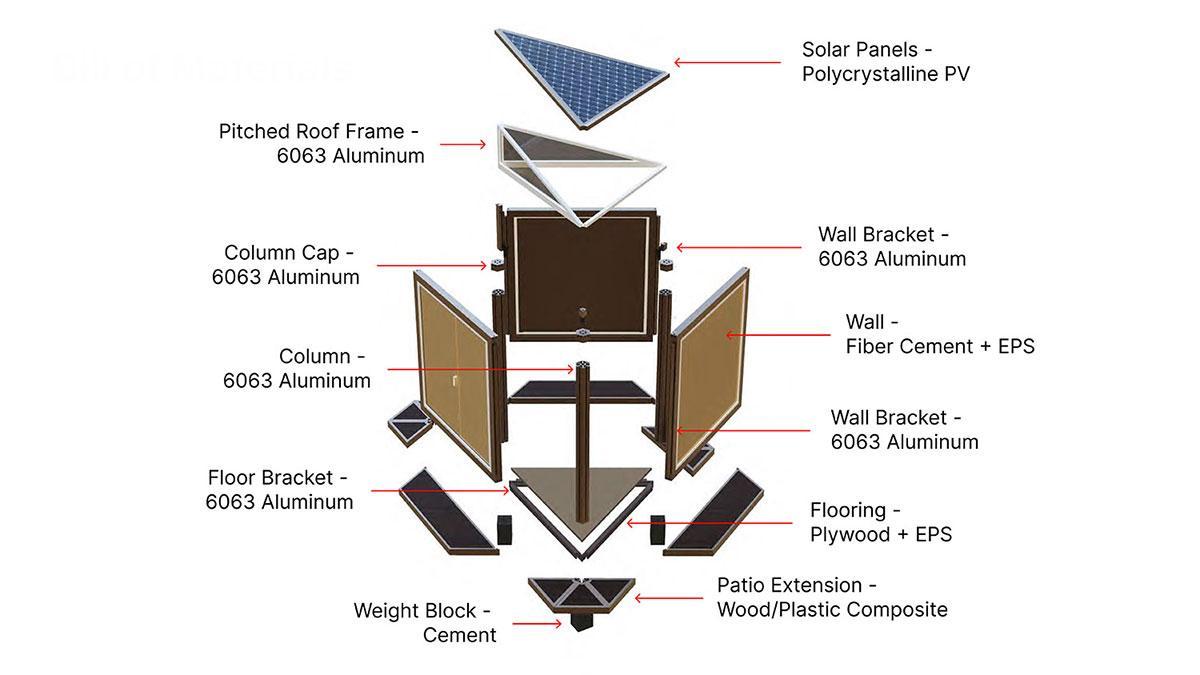
Charles and Enrico’s Modulo design answers this with a modular housing system engineered around a hexagonal, 6063 extruded aluminum column. Modulo offers a pathway to dignified, expandable shelter for low-income renters, homesteaders, and indigenous communities on entitled land.
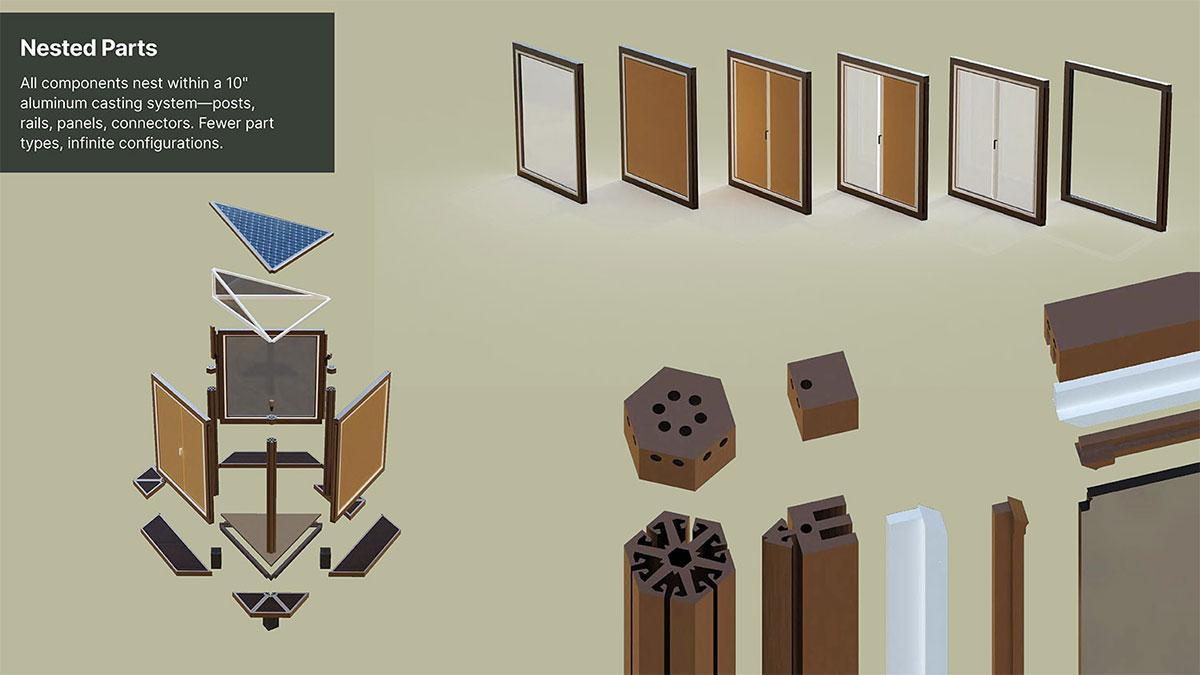
The extrusions are comprised of 6063 aluminum roof framing, center column, floor brackets, wall brackets, and aluminum column caps, combined with components made with cement, wood/plastic composite, fiber cement + EPS, and a polycrystalline PV solar roof panel. According to Charles, “The hexagonal extruded column does what no other material can match: one standardized profile serves simultaneously as structural post, connection hub and assembly guide. With six integrated connection points per column, the extrusion eliminates the need for separate joining hardware, reducing total part count dramatically while multiplying configuration possibilities.”
They add that the structure disassembles into component parts, fitting standard shipping channels. No heavy machinery or large emissions are required on site. Charles and Enrico cite another advantage, that aluminum extrusion’s inherent dimensional precision and consistent cross-section make flat-pack shipping possible, with optimal use of space. “Every column, rail, bracket, and cross beam nests predictably within a standard shipping envelope – something impossible with cast steel or timber framing. On site, that same precision means components self-align during assembly, requiring no heavy machinery, no skilled tradespeople, and no site-poured foundations. The extrusion profile IS the assembly instruction,” said Enrico.
All of Modulo’s components nest within a 10-inch aluminum casting system of posts, rails, panels, and connectors. There are fewer part types, yet with infinite configurations. Another advantage the students highlight is the minimal use of non-recyclable or toxic materials, as aluminum extrusions are non-toxic, along with reducing embodied carbon from manufacture to end-of-life. The modular unit’s connection system results from a manufacturing process that is seamless, with an integration of sewage, electricity, and water systems beneath the unit. The resident can begin with a single unit and add modules as needs and resources grow – the structure adapts and re-uses the identical column and connection system each time with no retooling, using fewer parts.
The judges recognized Modulo’s potential, with Craig Werner commenting, “The modular design is notable for several reasons; first, the six-sided Terkel members would provide greater flexibility in layout of facilities and connections and interior space opportunities. Secondly, the use of this modular approach creates necessary housing for low-income residents, or offers temporary housing in emergency situations during floods, hurricanes, etc., and incorporates other elements, such as panels with solar energy to provide much needed charging of phones or devices makes this a very important solution to many urgent housing problems in a sustainable way.”
Thank you to the 2026 Rick Merluzzi Aluminum Extrusion Student Design Competition Sponsors: